
「臺灣文化與永續發展:第三屆AI視覺創作之明信片設計競賽」
第一名展示
「《The Days We Cary — 看見被忽略的那幾天》
作品介紹
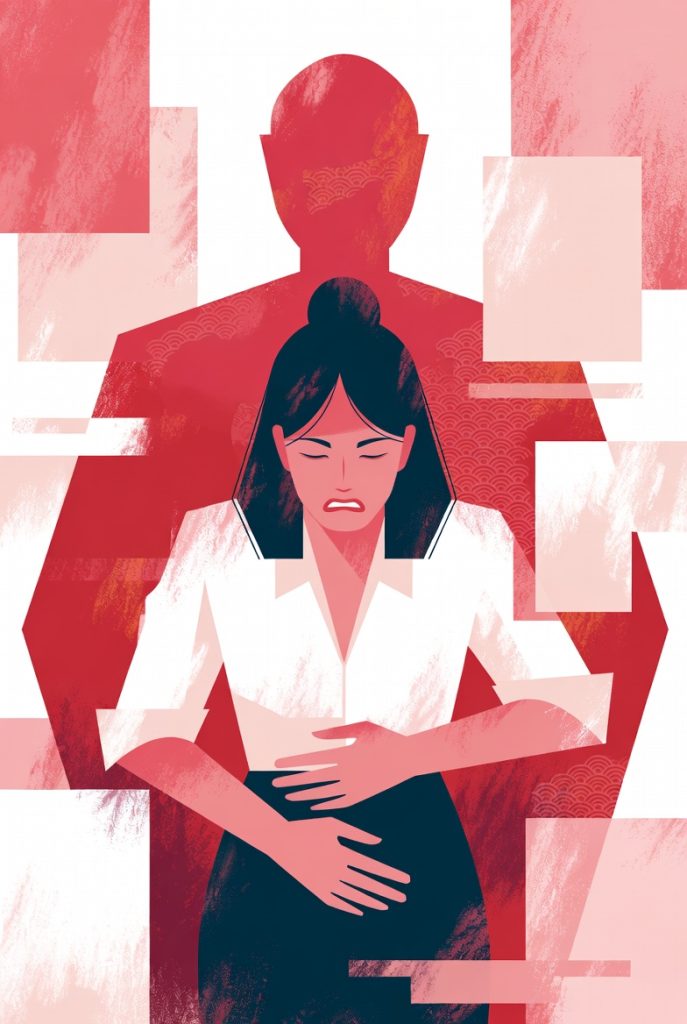
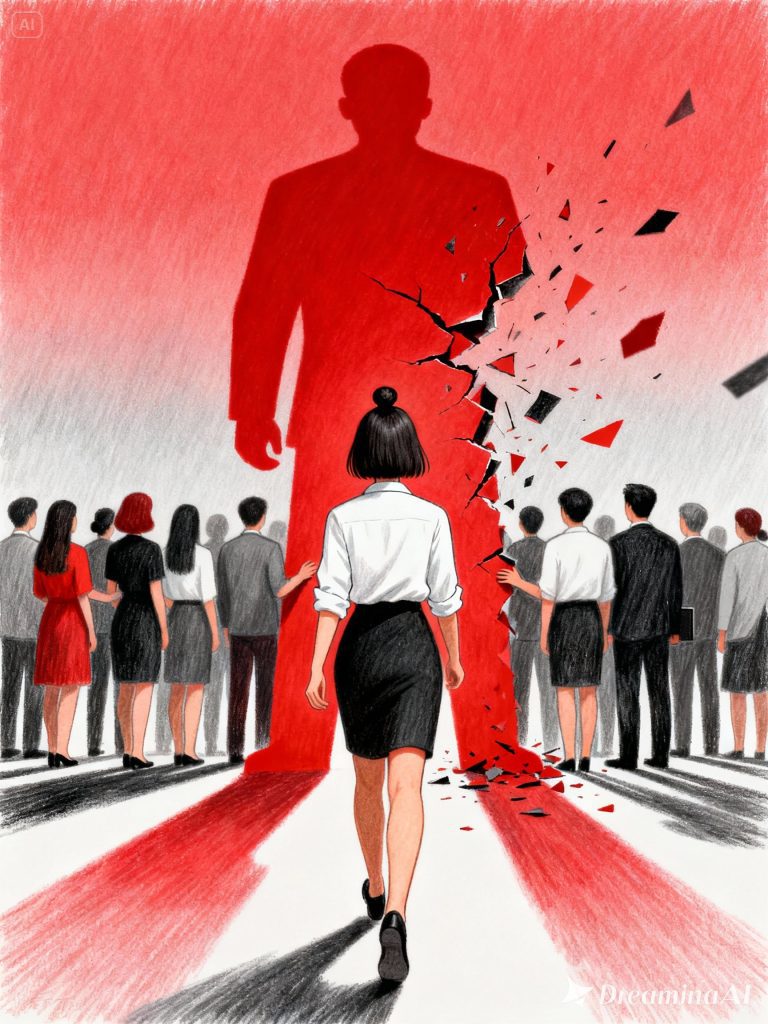
第一名-《The Days We Cary — 看見被忽略的那幾天》
國立台北教育大學 張宛婷
指導老師: 無
作品英文描述
This artwork envisions a hopeful future for Taiwan, where menstruation leave is no longer a source of silence, stigma, or fear, but an accepted and compassionate part of a sustainable and gender-equal society.
At the center of the image stands a working woman, facing forward with strength and dignity. She does not look back. Her figure remains whole and unbroken, symbolizing courage and self-worth. Behind her, a large male silhouette—arms crossed, representing rigid patriarchy and workplace pressure—slowly shatters into fragments. This breaking shadow reflects outdated power structures that have long made women afraid to speak openly about menstruation or request the leave they deserve.
Surrounding the woman are diverse figures standing behind her: feminine men, masculine women, and people beyond traditional gender roles. Together, they represent collective support. They do not confront from the front, but stand as quiet strength, pushing social change forward as one.
Through a restrained black, white, and dominant red color palette, the artwork connects menstrual pain with resilience, while soft gradients and colored-pencil textures express empathy rather than confrontation. Red becomes not only a symbol of menstruation, but of life, care, and transformation.
This piece reflects Taiwan’s ongoing journey toward Gender Equality (SDG 5). It imagines a future where menstruation leave is treated with the same respect as general medical leave—and where care, understanding, and shared responsibility become foundations of a truly sustainable Taiwan.
創作動機
Menstruation is not only a biological experience but also a social silence.
In Taiwanese workplaces, menstrual leave exists as a system, yet many women are still afraid to use it. They fear being seen as weak, troublesome, or irresponsible. This pressure does not come only from formal rules, but from invisible expectations deeply rooted in society.
The motivation for this work comes from observing how women often endure pain quietly, choosing productivity over care, while support remains optional rather than normalized. I wanted to imagine a future in which menstrual leave is not a symbol of fragility, but a shared responsibility and a sign of social maturity.
In this artwork, the female figure walks forward without breaking, while the male shadow behind her gradually fractures. This shadow represents rigid patriarchal structures and gender stereotypes that restrict not only women, but everyone. The figures standing behind her—feminine men, masculine women, and people beyond binary roles—stand together, not to overpower, but to support change.
This work envisions a sustainable Taiwan where menstrual leave is treated as an ordinary form of care, similar to sick leave, and where empathy extends beyond gender. By encouraging acceptance, flexibility, and shared understanding, menstrual leave becomes part of a broader commitment to gender equality and sustainable development.
Breaking the shadow is not about hostility—it is about creating space for compassion, dignity, and freedom for all.
心得與反思
While creating this piece, I reflected deeply on how social systems often treat physical pain differently depending on gender. Menstrual pain is real, recurring, and unavoidable, yet it is frequently minimized or joked about. This realization led me to think about sustainability not only as environmental responsibility, but also as emotional and social sustainability.
A society cannot be sustainable if its people are forced to endure pain in silence. Normalizing menstrual leave as an ordinary form of sick leave—and extending care toward all genders—can help create healthier workplaces and stronger human connections.
Through this artwork, I learned that visual storytelling can gently challenge rigid structures without aggression. The female figure does not shatter; instead, she moves forward. What breaks is the outdated shadow behind her.
I hope this work encourages viewers, regardless of gender, to reconsider their assumptions and to see menstrual leave as a shared social issue rather than a “women-only” problem. True gender equality begins when empathy replaces judgment, and when care becomes a collective value in building a sustainable future for Taiwan.